
Decoding Transcriptomes: A Practical Course on RNA-seq
16th – 20th March 2026
Overview
This hands-on program provides a comprehensive introduction to RNA sequencing, guiding participants through the complete workflow from sample preparation to data analysis. Participants will gain practical experience in RNA quality control, mRNA library preparation for Next Generation Sequencing (NGS), and library quality control. On the computational side, they will work with real sequencing data to learn key steps including data quality assessment, alignment, quantification, differential expression analysis, and functional interpretation.
The course integrates laboratory practice with computational training, equipping participants with the skills needed to design robust RNA-seq experiments and to apply reproducible analysis workflows following the FAIR practices. The program is complemented by theoretical lectures on state-of-the-art transcriptomics and bioinformatics, a guided visit to the CRG Genomics Unit, and networking activities.

Target Audience
Researchers, laboratory technicians, and bioinformaticians are interested in RNA-seq using next-generation sequencing (NGS), covering the complete workflow from sample preparation to data analysis.
Format
A hybrid program combining concise theoretical sessions with hands-on laboratory work (RNA QC, library preparation, sequencing) and practical computational analysis using reproducible workflows.
Main Goals
Participants will:
- Get an overview of the state-of-the-art in Transcriptomics and Next Generation Sequencing (NGS)
- Understand the differences between bulk RNA-seq, single-cell sequencing, and spatial transcriptomics
- Design RNA-seq experiments for diverse applications
- Perform RNA and library quality control and prepare mRNA libraries
- Understand NGS platforms and sequencing workflows.
- Assess RNA-seq data quality and work with common file formats.
- Perform reproducible RNA-seq data analysis, from quality control to differential expression.
- Conduct functional interpretation of RNA-seq results, including gene set enrichment analysis.
Scientific Organisers
Genomics Unit
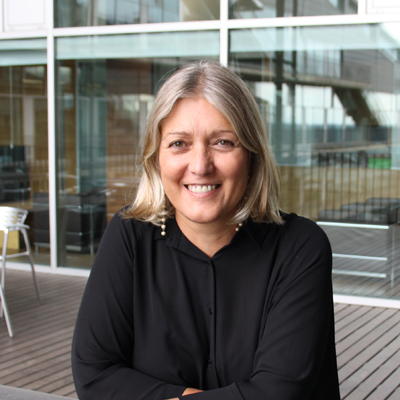
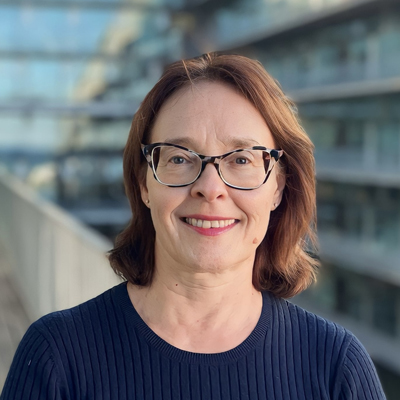
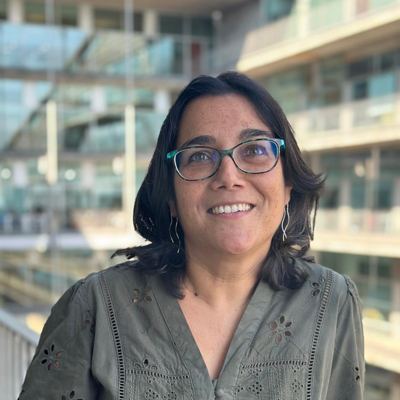
The Genomics Unit at the Center for Genomic Regulation (CRG) is part of the institute’s Core Technologies Program. It provides state-of-the-art next-generation sequencing (NGS) services to both internal researchers and external collaborators from academia and industry. The Unit offers a broad range of standard and customized protocols for DNA and RNA sequencing, with a strong focus on developing innovative methodologies and implementing cutting-edge technologies. Its activities support diverse research areas, including biomedicine, biodiversity, comparative genomics, ecosystem monitoring, and agrigenomics. More details can be found on the Genomics Unit website.
Bionformatics Unit
The Bioinformatics Unit supports researchers at CRG, PRBB, and beyond with high-throughput sequencing data analysis, experimental planning, and bioinformatics solutions that foster reproducible research, as well as provides training to disseminate good practices.
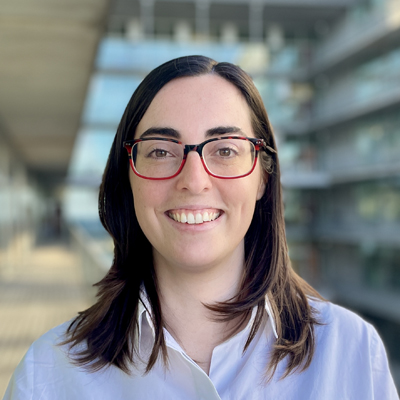
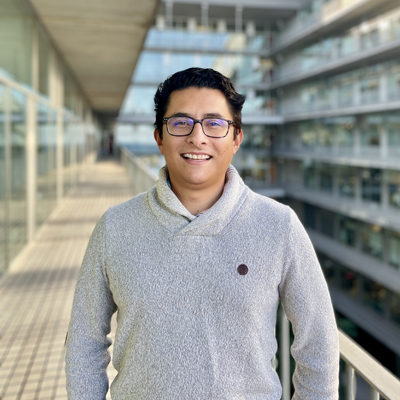
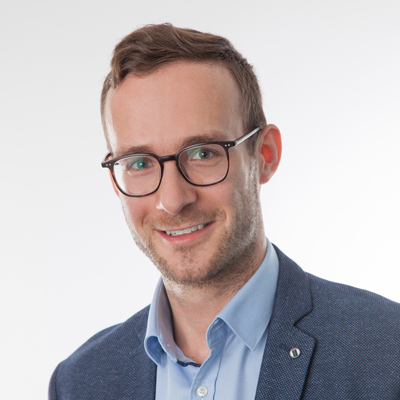
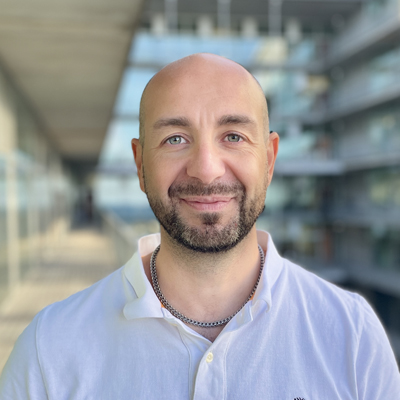
Speakers & Instructors


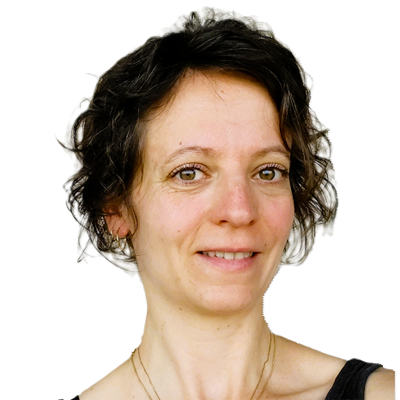
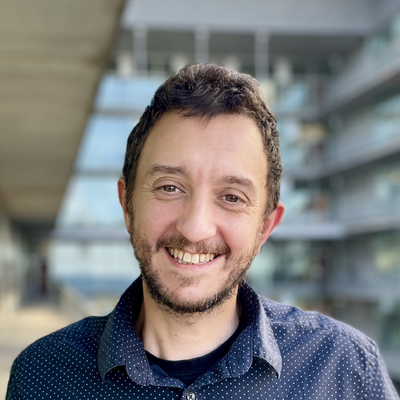
Programme
Day 1 – Monday 16 March 2026
|
9:00-9:15 |
Registration |
|
9:15-10:00 |
Welcome and course overview |
|
10:00-11:00 |
Talk 1: NGS applications Berta Fusté |
|
11:00-11:30 |
- Coffee break -
|
|
11:30-12:30 |
Talk 2: Comparison of Bulk RNA-seq, Single-Cell, and Spatial Transcriptomics Florian Köhler |
|
12:30-14:00 |
- Lunch -
|
|
14:00-15:00 |
Talk: Quality control RNA samples Nuria Andreu |
|
15:00-16.00 |
Talk: Introduction to the Watchmaker mRNA Library Prep protocol Nuria Andreu |
|
16:00-16:15 |
- Coffee break -
|
|
16:15-18:00 |
Hands-on: Prepare mRNA beads Nuria Andreu, Magda Montfort and Katti Pérez de Heredia |
Day 2 – Tuesday 17 March 2026
|
9:00-13:00 |
Hands-on: First part of the Watchmaker mRNA library prep Nuria Andreu, Magda Montfort and Katti Pérez de Heredia |
|
13:00-14:00 |
- Lunch -
|
|
14:00-16.00 |
Hands-on: Second part of the Watchmaker mRNA library prep Nuria Andreu, Magda Montfort and Katti Pérez de Heredia |
|
16:00-18.00 |
Hands-on: Library Quality Control Nuria Andreu, Magda Montfort and Katti Pérez de Heredia |
Day 3 – Wednesday 18 March 2026
|
9:00-9:30 |
Visit to the Genomics Core Facility |
|
9:30-11:00 |
Library Quality Control Nuria Andreu, Magda Montfort and Katti Pérez de Heredia |
|
11:00-11:30 |
- Coffee break -
|
| 11:30-12:00 |
Talk: Pre-processing of raw data and fastq format - What happens with data after the libraries were sequenced Anna Delgado |
|
12:00-12:30 |
Talk: FAIR & Reproducible practices in Bioinformatics - containers, public repos, git/GitHub Toni Hermoso |
|
12:30-13:00 |
Talk: RNA-seq data analysis: Workflow & Approaches Luca Cozzuto |
|
13:00-14:00 |
- Lunch -
|
|
14:00-14:30 |
Hands-on: Basics of Linux CLI |
|
14:30-16:00 |
Hands-on: Read QC: fastq format, FastQC, FastqScreen, kraken, MultiQC Anna Delgado |
| 16:00-16:15 |
- coffee break -
|
| 16:15-17:00 |
Hands-on: Read pre-processing: adapter trimming, riboPicker, MultiQC Luca Cozzuto |
| 17:00-18:00 |
Hands-on: Getting reference genome/transcriptome and annotation (ENSEMBL, Gencode, UCSC Genome Browser), GTF/GFF format Luca Cozzuto |
Day 4 – Thursday 19 March 2026
|
9:00-11:00 |
Hands-on: Read mapping to the reference genome/transcriptome and quantification (STAR, Salmon, SAM/BAM format, samtools, gene/transcript quantification, QualiMap Luca Cozzuto |
|
11:00-11:30 |
- Coffee break -
|
|
11:30-13:00 |
Hands-on: Review R basics (RStudio) Julia Ponomarenko, Fabian Andrade, Sarah Bonnin |
|
13:00-14:00 |
- Lunch -
|
|
14:00-16:00 |
Hands-on: DESeq2: import data from STAR and SALMON, filtering and normalization, PCA, sample clustering Fabian Andrade, Julia Ponomarenko |
| 16:00-16:15 |
- coffee break -
|
|
16:15-18:00 |
Hands-on: DE analysis using DESeq2. Functional analysis using R and GSEA application Fabian Andrade, Julia Ponomarenko |
|
18:00-21:00 |
Social activity |
Day 5 – Friday 20 March 2026
|
9:00-11:00 |
Hands-on: Running the full analysis using an nf-core pipeline Luca Cozzuto |
|
11:00-11:30 |
- Coffee break -
|
|
11:30-12:00 |
Talk: Design of RNA-seq experiment & Beyond bulk RNA-seq Julia Ponomarenko |
|
12:00-13:00 |
Q&A and General discussion |
|
13:00-14:30 |
- Lunch -
|
Registration
Number of participants: 16
Dates: 16th – 20th March 2026 (5 days)
Registration fee: 500 Euros (+21% VAT) for academic researchers and 1,000 Euros (+21% VAT) for industry participants. The fee covers full participation, course materials, lunches, coffee breaks, and social events. Travel and accommodation are not included.
Registration deadline: 5th January 2026
Selection criteria: Participants will be selected according to their CV and motivation statement. Selected participants will be notified via email shortly after application deadline.
Sponsors





Contact and venue
CRG Training and Academic Office
Email: courses@crg.eu
Phone: +34933160375
CRG – Centre for Genomic Regulation
Dr. Aiguader, 88
08003 Barcelona, Spain
Transport
By plane:
By train:
The city's main station is Estació de Sants. This station is serviced by numerous national and international trains, including high-speed trains.
Barcelona has other train stations:
- Estació de França, near Parc de la Ciutadella
- Plaça de Catalunya, in the city centre.
- Clot-Aragó, near Plaça de les Glòries.
- Arc de Triomf, station has a connection with Barcelona Nord bus station.
- Passeig de Gràcia, at the heart of the Modernista route.
Long-distance journeys are best booked in advance but for shorter journeys, including those in Barcelona on the local Rodalies (Catalan) or Cercanías (Spanish) services, you can buy a ticket before boarding the train.
Barcelona is also served by the Ferrocarrils de la Generalitat de Catalunya (FGC). Although they run short and medium-distance inter-city train services, these are integrated into the city's underground network, the Metro, which means you can use the T-10, a combined ticket for 10 journeys on city buses and the underground as well as the FGC trains.
By bus:
The main bus station is Barcelona Nord, which is very near the center, by the Arc de Triomf, although most buses stop at Sants station. There are national and international services and usually, it is not necessary to book in advance. The bus station is linked to the city’s underground system. Look at the map with the different underground lines and bus routes on the TMB website.
Transport from the Barcelona Airport El Prat
You can get to the city from the airport with the Aerobús with stops in Plaça d’Espanya, Urgell, Plaça de la Universitat and Plaça de Catalunya, or the underground line L9. The airport train station is located 200 meters outside the terminal T2 building and the train goes to the Barcelona Sants Estació.
There is also a standard bus and night bus. Click here for more information.
Supported by


CRG Trustees
.png)


Distinction

